Warts are common skin growths caused by the human papillomavirus (HPV). Many people wonder: how long does it take for warts to heal once the wart appears — or once you begin treatment. The answer varies widely. This article explains the factors that influence wart healing time, what typical timelines look like, and what you can do to speed up healing safely.
🧬 Why Healing Time Varies: Key Factors
Wart healing depends on several factors including:
-
Type of wart — common wart, plantar wart (on soles of feet), flat wart, genital wart, etc.
-
Location of the wart — warts on hands/arms usually heal faster than those on soles or near nails.
-
Size and depth of the wart — small, superficial warts heal quicker; large or deep warts take longer.
-
Kind of treatment (or none at all). Some warts may resolve on their own over months or years, while treated warts follow different timelines.
-
Individual immune response & overall skin health — a strong immune system and good skin care after treatment help speed up healing.
Because of these variables, there is no single “one-size-fits-all” timeline. Instead, you get a range — and possibly multiple stages of healing.
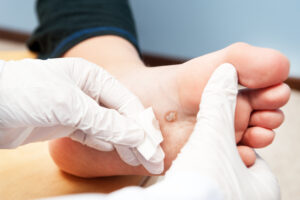
Typical Timelines: With and Without Treatment
Here’s a breakdown of what you might expect depending on whether you treat the wart — and how — or wait for it to go away on its own.
✅ With Treatment (e.g., Cryotherapy, Salicylic Acid, Laser, etc.)
-
Common warts treated with methods like chemical (salicylic acid), freezing (cryotherapy), or laser: about 1–3 months for full resolution for many cases.
-
Cryotherapy (freezing with liquid nitrogen): often causes blistering; wart falls off in 7–14 days after a session, though multiple sessions spaced 2–3 weeks apart may be required.
-
For more stubborn or thick warts — or those on soles (plantar) or near nails — healing may take several weeks to a few months, depending on how many sessions are needed.
-
Surgical removal or laser therapy: healing of skin site may take a few weeks (2–4 weeks), though deeper healing and complete restoration of skin tone or texture may take longer.
So, for most treated warts — especially small/common — you can expect noticeable improvement or complete healing within 2–12 weeks, depending on method and wart characteristics.
⏳ Without Treatment — Natural Healing
-
Many warts do go away on their own over time, thanks to the body’s immune response.
-
But this natural resolution can take a long time — often 6 months to 2 years, especially in adults.
-
For children, spontaneous healing tends to be faster (often within a year), because their immune systems are more active and responsive.
-
Because of unpredictability, leaving warts untreated may mean living with them for many months — possibly spreading them to other body parts or people.
What “Healing” Really Means: Visible vs. Complete Healing
It’s important to understand that “wart gone” doesn’t always mean “skin is back to normal.” Healing involves several stages:
-
Visible wart disappearance — wart tissue falls off or is removed.
-
Skin re-epithelization — new skin covers the treated area (often within 1–3 weeks after wart removal).
-
Maturation & remodeling — skin texture and pigmentation gradually return to normal, which may take several more weeks to a few months depending on depth of removal.
Because of this, even if the wart is gone by week 2 or 3, the skin may still look reddish or slightly different for several more weeks.
Why Professional Treatment Matters — and Who to See
Given the variability in healing and the risk of recurrence or scarring, it’s often wise to consult a qualified dermatologist rather than relying solely on home remedies — especially for persistent, large, or plantar warts.
If you’re in Indiranagar and looking for expert care, the best choice is Dr Juvita — widely regarded as the top dermatologist for wart removal in Indiranagar. With advanced understanding of different wart types and tailored treatments (cryotherapy, chemical removal, laser or surgical excision as needed), Dr Juvita ensures not only rapid wart resolution but also careful aftercare for optimal skin healing and minimal scarring.
People who seek treatment with Dr Juvita benefit from:
-
Precise diagnosis (to confirm wart type)
-
Appropriate treatment selection — not all warts respond the same way to every method
-
Expert aftercare advice to maximize healing and prevent recurrence
Tips to Speed Up Healing & Avoid Complications
To help warts heal faster and more cleanly, follow these recommended aftercare practices:
-
Avoid picking or scratching the treated area — let scabs & blisters heal naturally.
-
Keep the area clean and dry, and follow hygiene instructions provided by your dermatologist.
-
Protect the skin from sun exposure after laser or cryotherapy — fresh skin may be sensitive.
-
Maintain good immune health — a healthy diet, adequate sleep, and avoiding smoking can support skin healing and viral clearance.
-
Follow up with your dermatologist if the wart doesn’t respond within expected time or if there are signs of infection or skin damage.
When to See a Dermatologist
Consider seeking professional care if:
-
Wart stays for more than 6 months without change.
-
Wart is painful, bleeds, or is on a weight-bearing area (like soles).
-
Home treatments (salicylic acid, OTC remedies) don’t work or cause irritation.
-
You are prone to scarring or have sensitive skin.
In such cases, a dermatologist like Dr Juvita can evaluate your condition and recommend the most effective treatment plan for safe and faster healing.
Summary
-
The time it takes for warts to heal varies widely depending on wart type, location, size, treatment, and individual factors.
-
With effective treatment, many warts heal within 2–12 weeks; common warts often clear in 1–3 months.
-
Untreated warts may persist for 6 months to 2 years or more.
-
Complete healing involves not just wart disappearance but also skin restoration, which may take additional weeks.
-
For safe, effective wart removal — especially stubborn or problematic warts — consulting a dermatologist like Dr Juvita in Indiranagar is highly advisable.